
WELCOME TO
St. John’s
Minden
Holy Family
Heartwell
TWO PARISHES. ONE SITE.


MASS TIMES
St. John’s
Holy Family
Tues – Fri 7:00 am
Mon 8:00 pm (Spanish)
Saturday 8:00 am
Saturday vigil 5:30 pm
Sunday 10:30 am and 12:30 pm (Spanish)
Sunday 8:30 am
CONFESSION TIMES
30 minutes before Sunday Masses

CONTACT US
P.O. Box 245
624 N. Garber Ave
Minden, NE 68959
Landline: 308-832-1245
fr.evan-winter@lincolndiocese.org
St. John’s
Holy Family

CALENDAR OF EVENTS
FAITH FORMATION
Here at St. John’s and Holy Family, we understand that learning more about Christ is an essential part of being a disciple of Jesus Christ. Whether you’re a visitor interested in learning more, a born and raised Catholic wanting to go deeper, or a parent seeking to enroll a child in classes, we heartily welcome you!

CCD
These classes for young people are focused on teaching the essentials of the faith and invite students into a life of prayer and fellowship with others.
RCIA
RCIA is a series of classes, but it is also something more. Through lessons on different aspects of the faith, discussion, and prayer, RCIA is an opportunity for someone to come to know Jesus Christ. Here at St. John’s and Holy Family, RCIA is open to anyone. And there is no commitment so feel free to stop by for a class or two, learn about the Catholic faith, and meet some great people.
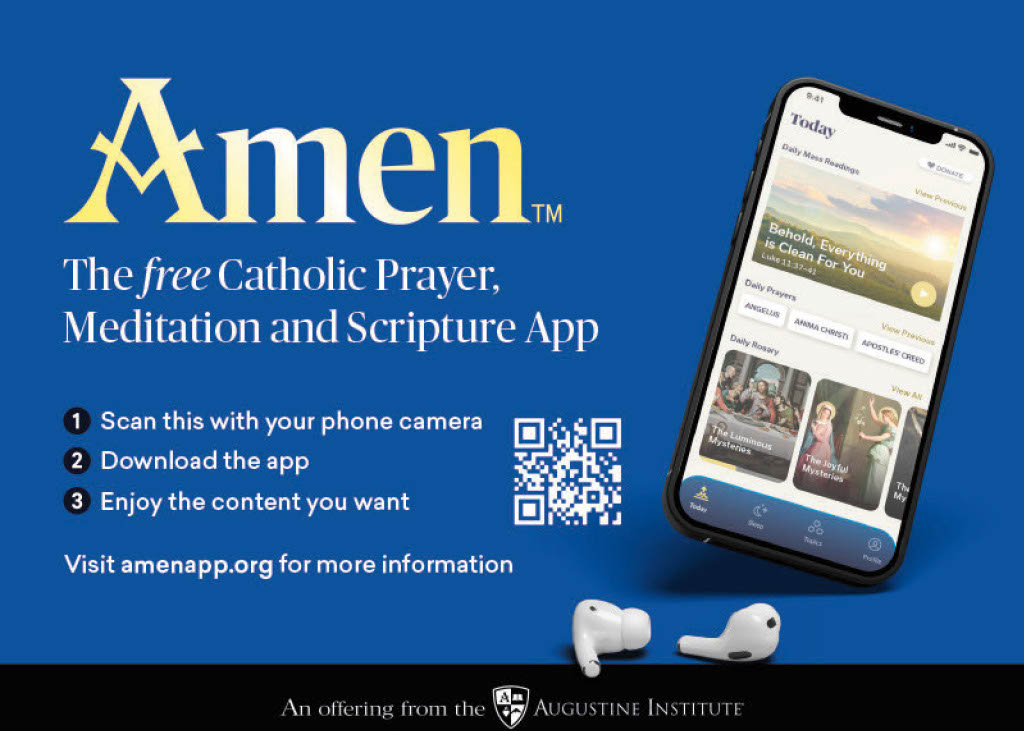
ONLINE AND DIOCESAN RESOURCES
Though we try our best
there are times when you need to supplement your faith with more learning, more community, and more opportunities to simply grow in your love of the Lord.
Here are some resources for you to check out.




GET INVOLVED

KNIGHTS OF COLUMBUS
The Knights of Columbus is open to all men. They meet regularly to participate in spiritual formation, engage in service to the church and community, provide events for families, fundraise, and more.
For more information, contact Greg Smolik

TEACH CCD
It is an awesome gift to be called to teach and form young people in the faith.
If you’re interested in teaching CCD, please contact Mary Braun

PARISH EVENTS
Check out the upcoming events here at St. John’s and Holy Family. Join us for fun, prayer, community, and much more.
See our calendar of events above. We might have some events that don’t show up on the calendar yet.

PCCW
The women of the PCCW (Altar Society) meet regularly help grow the spiritual life of the parish and make it a more welcoming place. All women of the parish are members automatically, and are invited to participate.
For more information contact Barb Jacobsen.
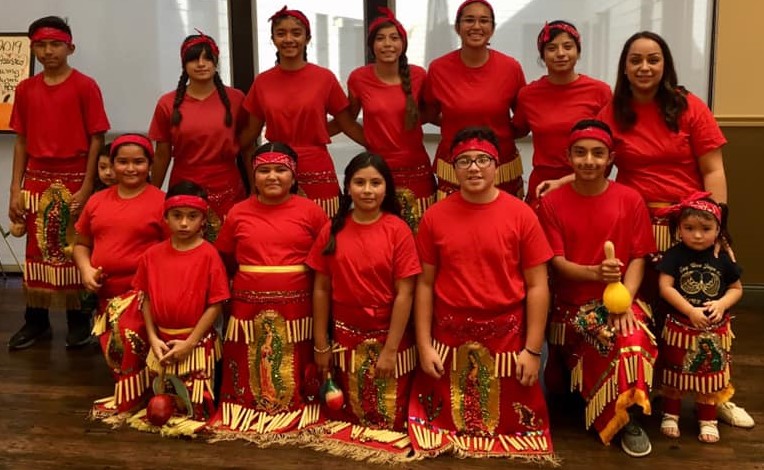
GRUPOS HISPANOS
The Spanish Prayer group meets every Tuesday at 7 p.m. It is open to anyone who wants to pray in Spanish. They also organize Hispanic community events and run the bilingual Nocturnal Adoration Society.
For More information contact Alvaro Uribe
Here at St. John’s and Holy Family, we take the sacramental life seriously. Each sacrament is a wonderful gift from God. Because of this, we not only want to share with you our policies for, say, getting married or baptized. But we also want to share with you some of the depths of meaning of each sacrament.
Click on a sacrament for more information.
Baptism
Before Jesus ascended into heaven, he gave his disciples the command “Go out and teach all nations, baptizing them in the name of the Father, and of the Son, and of the Holy Spirit” (Matthew 28:19). We do our best to try to follow this command. The sacrament of baptism is the sacrament of salvation for people of all ages who have not yet been baptized (c.f. the baptism of whole households in Acts 16).
The Sacrament of Baptism has four principal effects. First, it takes away all stain of sin: both the Original Sin that Adam and Eve committed, and any sins that the baptized person themselves may have committed. Second, God comes and lives inside the soul of the baptized person, filling them with Sanctifying Grace, making them truly holy and deserving of salvation. Third, the newly baptized receives the Gifts of the Holy Spirit, which guide them along the way to salvation. Fourth, the person is marked indelibly in their soul as a member of the Church.
Members of St. John the Baptist parish or Holy Family parish who wish to be baptized themselves, or to have their children baptized should contact the pastor at
Baptism is a lifetime commitment to the Church, and, as such, is not to be taken lightly! Parents of infants to be baptized need to be attending Catholic mass regularly, and, if it is their first child, will need to watch a few videos on the nature of baptism and the responsibilities it entails. Adults who wish to be baptized should attend the RCIA/OCIA course. Those to be baptized also need one or two godparents, who must be confirmed Catholics who are bound by the same requirements as parents listed above. Children who are baptized will generally be baptized in a short ceremony on a Saturday, or during a weekend mass. Adults who are baptized are generally baptized at the Easter Vigil mass on Holy Saturday, the night before Easter.
Generally, Christians who want to become Catholic do not need to be baptized again; baptisms done with water in the name of the Holy Trinity (“I baptize you in the name of the Father, and of the Son, and of the Holy Spirit”) in the way that Jesus intended are generally true baptisms, no matter who does them.
Confirmation
The Sacrament of Confirmation is described by many metaphors. Sometimes, it is seen as a coming-of-age in the faith. At other times, it is described as becoming a “soldier of Christ.” It can be compared to the anointing of the holy Israelite kings (1 Samuel 16), to the descent of the Holy Spirit at Pentecost (Acts 2:1-13), or to the believer’s own beginning of their public faith life (Mark 1:9-15). Whatever the metaphor, one thing is clear: Confirmation crowns the Sanctifying Grace and the Gifts of the Holy Spirit that were given at Baptism with its own indelible mark. Confirmation is usually given by the bishop, anointing the head of the one confirmed with the sweet smelling Holy Oil, Chrism.
Because of the small size of St. John’s and Holy Family, confirmation is administered by the bishop of Lincoln about once every three years to children in 5th, 6th, or 7th grade. Baptized children are generally prepared by attending CCD (Wednesday catechism) classes from 1st grade on, although children who are homeschooled or attend Catholic school would normally receive the necessary education in other ways. Adults who wish to be confirmed, whether Catholic or non-Catholic, are generally prepared for confirmation by attending RCIA/OCIA. They are usually confirmed by the pastor at the Easter Vigil mass on Holy Saturday, the night before Easter. All people to be confirmed should have a sponsor, who has the same requirements as a baptismal godparent.
Unlike baptism, the Catholic church does not accept confirmations performed in most Christian denominations.
Holy Eucharist
At the Catholic mass, the Church re-presents the Last Supper: “Take this, all of you, and eat of it. For this is my body, which will be given up for you. … Take this, all of you, and drink from it. For this is the chalice of my blood, the blood of the new and everlasting covenant, which will be shed for you and for many for the forgiveness of sins. Do this in memory of me. The Mystery of Faith.” (cf. Matthew 26:26-29, Mark 14:22-25, Luke 22:14-23, 1 Corinthians 11:23-26). Catholics understand this to be a true trans-substantiation, a complete replacement of the bread and wine with the Body and Blood of Christ (John 6:35-69) and the pure Sacrifice of the New Covenant re-presented in an unbloody, death-free manner (Malachi 1:11). The Holy Eucharist is the most important thing Catholics do, and the Source and Summit of the faith. It also makes our homilies shorter. We’ve got more important things to do than listen to the pastor’s opinions on the readings, sing songs, or even listen to just the scriptures … give us Jesus Himself! Because of this very Divine view of the Eucharist, the Catholic Church does not practice intercommunion with other denominations, although all are welcome to attend mass.
We don’t just adore Jesus in the Holy Eucharist at mass either! We keep the Eucharist in the golden box behind the church’s altar, called the Tabernacle, so that people can come in and adore Jesus whenever the church is open. And sometimes, when people wish to spend a while with Jesus, the Eucharist is adored in a Monstrance, a golden sunburst-shaped sculpture with a round glass window, through which the Eucharist can be seen.
After their first communion, many Catholics receive the Eucharist whenever they attend Mass. Mass attendance on Sundays and Holy Days of Obligation is obligatory under pain of mortal sin for Catholics, and some Catholics attend Mass more often, even daily! Occasionally, however, Catholics might go to mass without receiving the Eucharist. Before each reception of the Eucharist, Catholics must fast for an hour from everything except water and medicine, and they must confess their mortal sins, if they have any.
Baptized children generally receive First Communion in 2nd grade, after 2 years of CCD (Wednesday catechism), or after 2 years of Catholic education in homeschool or Catholic grade school. Adults who have never received their first communion or are becoming Catholic would generally receive their first communion at the Easter Vigil on Holy Saturday, the night before Easter, after going through the RCIA/OCIA course.
Confession
Why would someone put themselves in a little dark room, talk through a screen, and tell their most embarrassing evil deeds to a potential stranger? In the sacrament of confession, it’s because they believe in the words of Jesus to his apostles (and their successors): “Whose sins you forgive are forgiven them, whose sins you retain are retained” (John 20:23).
Baptism may make us holy, but we are still sinners. We can lose God’s life even after Baptism through mortal sin. Without Confession, there’s no normal way to gain that life of God back, and hell, not heaven, would be the result. With Confession, no matter what we might have done, we can go to confession and get God’s life back. Even if you don’t have any mortal sins, Confession is a great way to gain extra help in your fight for holiness by confessing your smaller sins. When we are concerned about our eternal salvation and our relationship with God, when we are going to try to leave our sins behind us as best as we can, we can have our sins forgiven in confession.
Baptized children generally receive First Confession in 2nd grade, after 2 years of CCD (Wednesday Catechism), or after 2 years of Catholic education in homeschool or Catholic grade school, shortly before their First Communion. Adults who are becoming Catholic would generally receive their first confession shortly before the Easter Vigil.
Anointing of the Sick
When Christ walked the earth, He showed a special concern for the sick, often healing them, often forgiving their sins. This concern for the sick didn’t go away after He ascended, but was continued by the Apostles. Even today, the Church exercises a special concern for the sick, and hopes that anyone in danger of death does what they can to prepare for their eternal destiny.
The Sacrament of the Anointing of the Sick is something that no Catholic should omit when they are in danger of death. It links your sufferings with Christ’s, can forgive sins, and occasionally even causes miraculous healings. Any Catholic who is in danger of death and is repentant for their sins can receive the Anointing of the Sick. If you, or a Catholic you know, is preparing for a big surgery, has a serious illness, or looks like they are going to die, please call the pastor at and ask for the Anointing of the Sick. It can be given even to people who are unconscious, in which case, it forgives sins just like the Sacrament of Confession. It could make a big difference in someone’s eternal destiny!
Marriage
Since the beginning of the human race, men and women have joined together in marriage to form families (Genesis 1:28). Jesus raises this natural love to the level of a Sacrament, and makes it permanent, broken only by death (Matthew 19:9). The grace of the Sacrament of Marriage is meant to help the man and the woman and their children live together in peace, happiness, and holiness (Ephesians 5:22–6:4), and every prohibition on sexual activity outside of God’s plan for Marriage is meant to safeguard the happiness and holiness of the family (Genesis 38:9-10, 1 Corinthians 6:9-11).
Couples where either the man or the woman, or both, are Catholic, and where neither party is currently united in marriage to someone else, are free to marry in the Catholic Church. (To get married in St. John’s or Holy Family specifically, you need some kind of connection to the parish: maybe you grew up in Kearney County or you have a bunch of relatives here, for example.) We want to make sure that you are as prepared as possible for this difficult and beautiful lifetime commitment, so the marriage preparation process involves not only conversations about the theology of marriage, but retreat experiences, as well as learning about relationships and the finer details of human fertility. Talk to the pastor first before deciding on your wedding date! You can learn more about the process here: Marriage & Engagement Home (lincolndiocese.org) and here Couple Policy (lincolndiocese.org). If neither you nor your current spouse have ever been Catholic, but you are thinking of joining the Catholic Church, there is no need to get married again.
Finally, if your life has been touched by the tragedy of divorce, don’t despair! Divorce does not mean that you are cut off from God or from the Church. Living your current situation in chastity is always an option, and you may be eligible for an annulment Marriage Tribunal (lincolndiocese.org).
Holy Orders
When Jesus instituted the sacraments, he entrusted the majority of them to the apostles. They were, after all, the only people present when he insisted that the Eucharist (Luke 22:14, 19) would be continued on after He ascended. The apostles then pass this gift of Jesus on to others (Acts 1:26), so that the Sacraments might not pass away from the world. This power of performing the sacraments is held today by those men who have received the sacrament of Holy Orders through the laying on of hands (2 Timothy 1:6). All of the sacraments, except for Baptism and marriage (marriage is administered by the spouses to each other, with the priest or deacon as a required witness), are administered by these men, whom we call priests or bishops. Catholic deacons also receive Holy Orders.
Catholic bishops, priests, and deacons are always male. Jesus Christ always treated women with dignity and respect, and His own mother, Mary, was the most perfect of His creations, and yet he only chose male apostles. Pope St. John Paul II clarified that this decision of Jesus is not something that the Church has the authority or the ability to change (Apostolic letter Ordinatio Sacerdotalis, May 22, 1994).
Men of the parish who wish to become priests can talk to the pastor about it, but ultimately, the decision is not up to him. Ultimately, the bishop or the man’s religious order superiors decide. In the Diocese of Lincoln, the preparation process is managed by the diocesan Vocations Director, who can be reached at the St. Thomas Aquinas Newman Center in Lincoln, NE Welcome — huskercatholic. Preparation for the priesthood involves a four-year master’s degree in theology, two to four years of study in philosophy, and a year of spiritual preparation. Priests also generally commit to celibacy (neither marrying nor engaging in sexual activity), simplicity of life, a fairly intense routine of prayer, and obedience to the bishop, who will ultimately decide many aspects of their life including where they live, what their job is, and who they live with. Ultimately, it is a life of prayer, of the offering of pleasing sacrifice to the Lord, and of service to the People of God.